

High-Performance Fibres
These rope-making materials exhibit high strength coupled with low elongation—known as high-modulus fibres—and are designed pushing the limits.
| Logo | Trade Name | Material | Standard Raw Colour | Chemical Structure |
|---|---|---|---|---|
 |
Stealth Fibre® | UHMWPE | White |  |
 |
Technora® | Aramid Copolymer | Black or Beige |  |
 |
Twaron® | Para-Aramid | Black or Beige |  |
 |
Vectran™ | LCP | Beige |  |
 |
Zylon® | PBO | Copper |  |
| Trade Name (Material) |
Specific Gravity | Breaking Tenacity (g/D) |
Modulus (g/D) |
Elongation at Break (%) |
Creep Resistance* | Abrasion Resistance | Max Operating Temp | Melting Point or Decomposition Temp |
|---|---|---|---|---|---|---|---|---|
| Stealth Fibre® (UHMWPE) |
0.98 (Floats) |
35 – 40 | 1250 – 1400 | 3.0 – 3.5 | Fair | Excellent | 70°C (155°F) | Melts at 150°C (300°F) |
| Technora® (Aramid Copolymer) |
1.39 (Sinks) |
28 | 590 | 3.9 – 4.5 | Very Good | Good | 270°C (520°F) | Does not melt. Decomposes at 500°C (930°F) |
| Twaron® (Para-Aramid) |
1.44 – 1.45 (Sinks) |
20 – 29 | 432 – 983 | 2.3 – 4.2 | Very Good | Fair | 270°C (520°F) | Does not melt. Decomposes at 500°C (930°F) |
| Vectran™ (LCP) |
1.40 (Sinks) |
23 – 29 | 525 – 585 | 2.8 – 3.8 | Excellent | Very Good | 148°C (300°F) | Melts at 330°C (625°F) |
| Zylon® (PBO) |
1.54 – 1.56 (Sinks) |
42 | 1300 – 2000 | 2.5 – 3.5 | Excellent | Fair | 330°C (625°F) | Does not melt. Decomposes at 650°C (1200°F) |
| Trade Name (Material) |
Moisture Regain (%) | UV/Sunlight Resistance | Effects of Chemical Exposure |
|---|---|---|---|
| Stealth Fibre® (UHMWPE) |
0.0 | Excellent |
Resistant to most concentrated industrial acids, bases, oxidizers and organic solvents at room temperature. Resistant to many acids/bases/oxidizers/solvents at elevated temperatures. Excellent resistance to water, moisture and micro-organisms. |
| Technora® (Aramid Copolymer) |
2.0 | Limited | Resistant to acids, bases and organic solvents. |
| Twaron® (Para-Aramid) |
3.5 – 6.5 | Limited |
Resistant to weak acids, bases, water and salt water. Degradation induced by strong acids and bases in high concentration or high temperature. |
| Vectran™ (LCP) |
< 0.1 | Limited | Stable in acids < 90% concentration and bases < 30% concentration. |
| Zylon® (PBO) |
0.6 – 2.0 | Limited |
Resistant to weak acids, bases, bleach and organic solvents. Degradation induced by strong acids at high temperatures. |
Commercial Fibres
Common, volume-driven materials.
| Trade Name | Material | Standard Raw Colour | Chemical Structure |
|---|---|---|---|
| Nylon | Polyamide | White | 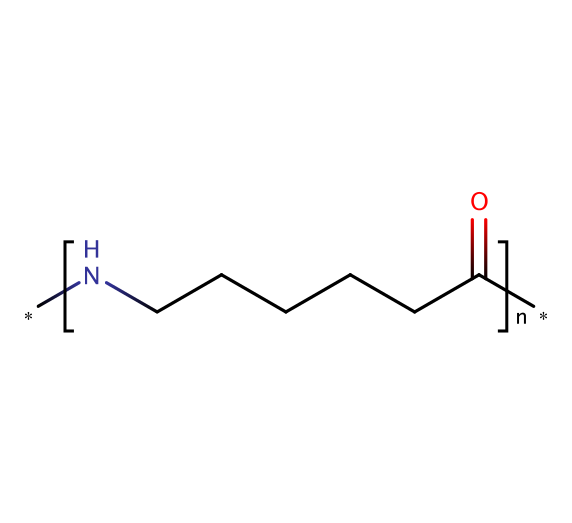 |
| Polyester | Polyethylene Terephthalate | White | 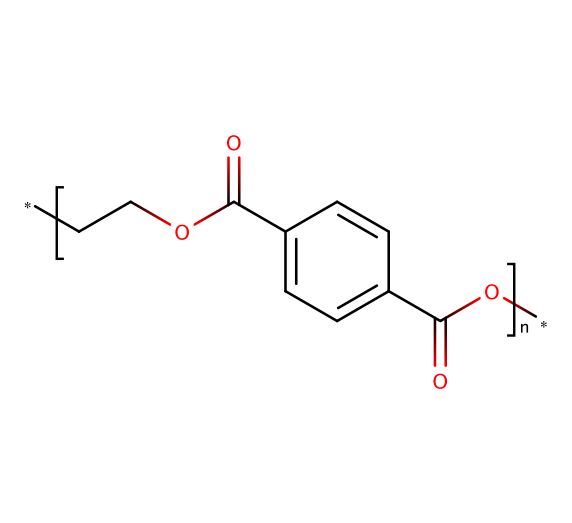 |
| MFPP | Multifilament Polypropylene | White | 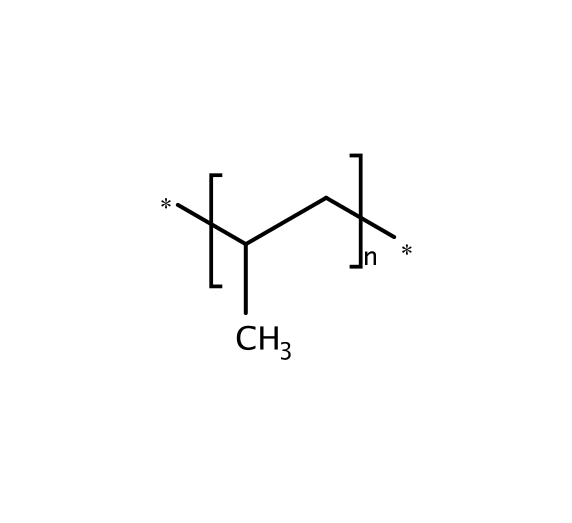 |
| HDPE | High-Density Polyethylene | White | 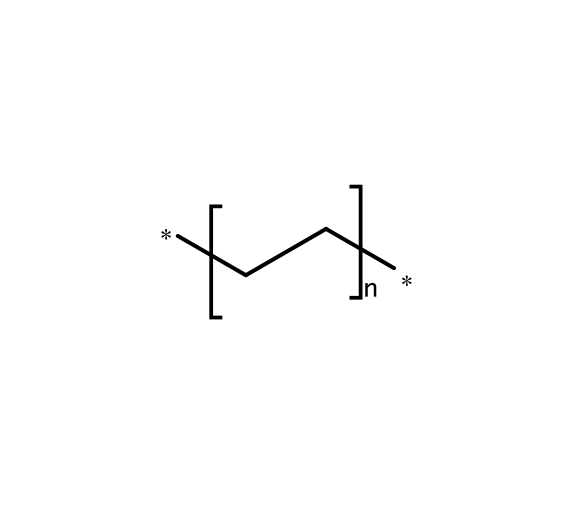 |
| Polysteel® | Polyolefin Copolymer | White | 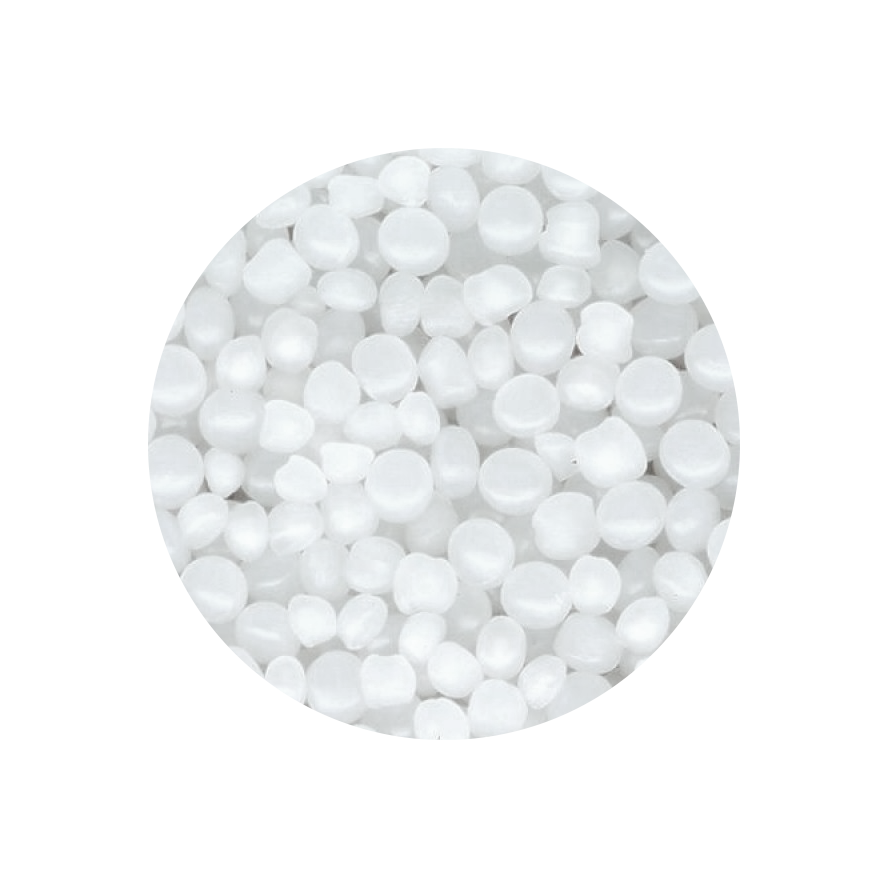 |
| Polyerene® | Polyolefin/Polyester Blend | White | |
| Cotton | Natural Fibre (± 99% Cellulose) |
Cream | 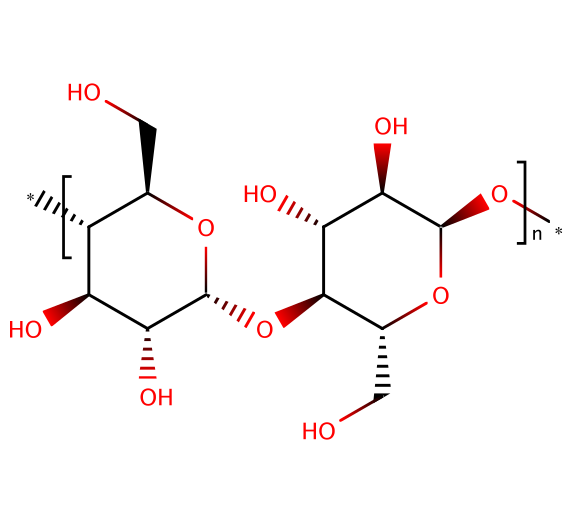 |
| Manila | Natural Fibre (± 76% Cellulose) |
Brown | |
| Trade Name (Material) |
Specific Gravity (Floats/Sinks) |
Breaking Tenacity (g/D) |
Elongation at Break (%) |
Creep Resistance* | Abrasion Resistance | Max Operating Temp | Melting Point |
|---|---|---|---|---|---|---|---|
| Nylon (Polyamide) |
1.14 (Sinks) |
Dry: 7.5 – 10.5 Wet: 6.5 – 9.0 |
Dry: 15 – 30 Wet: 30 – 45 |
Dry: Fair Wet: Poor |
Dry: Very Good Wet: Poor |
160°C (320°F) | 218°C (425°F) |
| Polyester (Polyethylene Terephthalate) |
1.38 (Sinks) |
7.0 – 10.0 | 12 – 18 | Good | Very Good | 175°C (350°F) | 260°C (500°F) |
| MFPP (Multifilament Polypropylene) |
0.91 (Floats) |
6.5 | 18 – 22 | Poor | Fair | 120°C (250°F) | 165°C (330°F) |
| HDPE (Polyethylene) |
0.95 (Floats) |
6 | 20 – 25 | Poor | Fair | 80°C (175°F) | 140°C (285°F) |
| Polysteel® (Polyolefin Copolymer) |
0.93 (Floats) |
7.2 | 18 – 22 | Poor | Fair | 93°C (200°F) | 140°C (285°F) |
| Polyerene® (Polyolefin/Polyester Blend) |
1.14 (Sinks) |
7.5 | 12 – 18 | Fair | Very Good | 130°C (265°F) | 196°C (385°F) |
| Cotton (Natural Fibre) |
1.54 (Sinks) |
2.0 – 3.0 | 10 | Very Good | Fair | 100°C (210°F) | Does not melt. Chars at 150°C (300°F) |
| Manila (Natural Fibre) |
1.32 (Sinks) |
5.0 – 6.0 | 10 – 12 | Very Good | Fair | 100°C (210°F) | Does not melt. Chars at 150°C (300°F) |
| Trade Name (Material) |
Moisture Regain (%) | Microbial Resistance | UV/Sunlight Resistance | Chemical Exposure Effects |
|---|---|---|---|---|
| Nylon (Polyamide) |
4.0 – 6.0 | Excellent | Good |
|
| Polyester (Polyethylene Terephthalate) |
< 0.5 | Excellent | Very Good |
|
| MFPP (Multifilament Polypropylene) |
0 | Excellent | Fair |
|
| HDPE (Polyethylene) |
0 | Excellent | Good |
|
| Polysteel® (Polyolefin Copolymer) |
0 | Excellent | Very Good (UV Stabilised) |
|
| Polyerene® (Polyolefin/Polyester Blend) |
< 0.5 | Excellent | Very Good (UV Stabilised) |
|
| Cotton (Natural Fibre) |
100 | Poor | Very Good |
|
| Manila (Natural Fibre) |
100 | Poor | Very Good |
|
Fibre Sorted by Property
| Trade Name | Material | Specific Gravity |
|---|---|---|
| MFPP | Multifilament Polypropylene | 0.91 |
| Polysteel® | Polyolefin Copolymer | 0.93 |
| HDPE | High-Density Polyethylene | 0.95 |
| Stealth Fibre® | UHMWPE | 0.98 |
| Fresh Water | Fresh Water | 1.00 |
| Salt Water | Salt Water | 1.03 |
| Nylon | Polyamide | 1.14 |
| Polyerene® | Polyolefin/Polyester Blend | 1.14 |
| Manila | Natural Fibre | 1.32 |
| Polyester | Polyethylene Terephthalate | 1.38 |
| Technora® | Aramid Copolymer | 1.39 |
| Vectran® | LCP | 1.40 |
| Twaron® | Para-Aramid | 1.44 – 1.45 |
| Cotton | Natural Fibre | 1.54 |
| Zylon® | PBO | 1.54 – 1.56 |
| Aluminium | Aluminium | 2.72 |
| Steel Wire | Steel Wire | ~ 7.82 |
| Trade Name | Material | Max Operating Temp | Melting Point |
|---|---|---|---|
| Stealth Fibre® | UHMWPE | 70°C (155°F) | 150°C (300°F) |
| HDPE | High-Density Polyethylene | 80°C (175°F) | 140°C (285°F) |
| Polysteel® | Polyolefin Copolymer | 93°C (200°F) | 140°C (285°F) |
| Cotton | Natural Fibre | 100°C (210°F) | Does not melt. Chars at 150°C (300°F) |
| Manila | Natural Fibre | 100°C (210°F) | Does not melt. Chars at 150°C (300°F) |
| MFPP | Multifilament Polypropylene | 120°C (250°F) | 165°C (330°F) |
| Polyerene® | Polyolefin/Polyester Blend | 130°C (265°F) | 196°C (385°F) |
| Vectran® | LCP | 148°C (300°F) | 330°C (625°F) |
| Nylon | Polyamide | 160°C (320°F) | 218°C (425°F) |
| Polyester | Polyethylene terephthalate | 175°C (350°F) | 260°C (500°F) |
| Technora® | Aramid Copolymer | 270°C (520°F) | Does not melt. Decomposes at 500°C (930°F) |
| Twaron® | Para-Aramid | 270°C (520°F) | Does not melt. Decomposes at 500°C (930°F) |
| Zylon® | PBO | 330°C (625°F) | Does not melt. Decomposes at 650°C (1200°F) |
| Trade Name | Material | Elongation at Break (%) |
|---|---|---|
| Twaron® | Para-Aramid | 2.3 – 4.2 |
| Zylon® | PBO | 2.5 – 3.5 |
| Vectran® | LCP | 2.8 – 3.8 |
| Stealth Fibre® | UHMWPE | 3.0 – 3.5 |
| Technora® | Aramid Copolymer | 3.9 – 4.5 |
| Cotton | Natural Fibre | 10 |
| Manila | Natural Fibre | 10 – 12 |
| Polyester | Polyethylene terephthalate | 12 – 18 |
| Polyerene® | Polyolefin/Polyester Blend | 12 – 18 |
| MFPP | Multifilament Polypropylene | 18 – 22 |
| Polysteel® | Polyolefin Copolymer | 18 – 22 |
| HDPE | High-Density Polyethylene | 20 – 25 |
| Nylon | Polyamide | Dry: 15 – 30 Wet: 30 – 45 |
Custom Specifications
All rope presented in this catalogue can be manufactured to custom specifications (reel length, diameter, colour, and materials used can all be varied according to requirements). Please contact us directly for any unique requirements you may have.
Break Load
Break load is an average result achieved under laboratory conditions, in straight-line pulls with constantly increasing tensile loads. These conditions are rarely duplicated in actual use. Do not use breaking load for design or rating purposes, use safe working load figures The breaking load is determined by taking the load that each line in a sample of five breaks and then dividing by five to determine the average breaking load. Break loads may vary slightly for individual reels, but safe working loads will not.
Safe Working Loads
Because of the wide range of rope use, exposure to the several factors affecting rope behaviour, and the degree of risk to life and property involved, it is impossible to make blanket recommendations as to working loads. However, to provide guidelines, working loads are tabulated for rope in good condition with appropriate splices, in non-critical applications and under normal service conditions. Please note that recommended the safe working load for all ropes presented in this catalogue is one fifth (1/5) of the breaking load.
Dynamic Loads
Normal working loads are not applicable when rope is subject to significant dynamic loading. Instantaneous changes in load, up or down, in excess of 10% of the line’s rated working load constitutes hazardous shock load and would void normal working loads. Whenever a load is picked up, stopped, or swung there is an increased force due to dynamic loading. The more rapidly or suddenly such actions occur, the greater the increase will be. Examples could be picking up a tow on a slack line or using a rope to stop a falling object. Therefore, in all such applications such as towing lines, lifelines, safety lines, climbing ropes, etc., working loads as given do not apply.
Users should be aware that dynamic effects are greater on a high modulus (low stretch) ropes, such as Stealth Fibre® UHMwPE/LCP/Aramid/PBO, than on a high stretch rope, such as Nylon, and greater on a shorter rope than on a longer one. The working loads listed contain a provision for very modest dynamic loads. This means, however, that when the working load has been used to select a rope, the load must be handled slowly and smoothly for the working loads to be valid.
General Care
Ropes can be damaged in many ways. The main causes are UV exposure, chemicals, oil, sharp objects, and abuse.
Don't store your rope in direct sunlight.
Avoid excessive exposure to oil, chemicals, and chemical fumes.
Using a rope bag will prolong the life of your rope.
Never step on your rope. This grinds particles of dirt into the rope's core causing abrasion.
Give your rope a bath on occasion.
Retire your rope, when it shows signs of wear.
Inspect each line before use. It is impossible to state when to replace a line, but if you have any doubts about the integrity of the line, replace it.
Unreeling New Rope
Remove rope properly from reels to prevent kinking. The rope should be removed by pulling it off the top while the reel is free to rotate. To proceed in any other manner may cause kinks or strand distortion. Never unreel rope from the side of the drum.
Handling
Never stand in line with rope under tension. If a rope fails it can recoil with lethal force. Synthetic rope has higher recoil tendencies than natural fibre rope. Reverse rope ends regularly. This permits even wearing and assures a longer, useful life.
Abrasion
Wherever possible abrasive conditions should be avoided. All rope will be severely damaged if subjected to rough surfaces or sharp edges. Chocks, bits, winches, drums and other surfaces must be kept in good condition and free of burrs and rust. Pulleys must be free to rotate and should be of proper size to avoid excessive wear. Clamps and similar devices will damage and weaken the rope and should be used with extreme caution. Do not drag rope over rough ground. Dirt and grit picked up by rope can work into the strands, cutting the inside fibres.
Chemicals
Most synthetic fibres will withstand small doses of common chemicals. If you have any doubt please contact us for clarification. It is generally advisable to avoid exposure to chemicals where possible.
Temperature
Temperature has an effect on tensile strength. The tensile strength charts apply to ropes tested at normal room temperature. Ropes have lower tensile strengths at higher temperatures. Also continued exposure at elevated temperatures can melt and part synthetic ropes or cause permanent damage.
Splicing & Terminations
Join rope by splicing. If done correctly, a splice will not weaken the rope, whereas knots can decrease rope strength by as much as 60%. Other terminations can be used but their strength loss with a particular type of rope and construction should be determined and not assumed.
Storage & Care
All rope should be stored clean, dry, out of direct sunlight, and away from extreme heat. Some synthetic rope (particularly polypropylene, polyethylene, and aramid) may be severely weakened by prolonged exposure to ultraviolet (UV) radiation unless specifically stabilized and/or pigmented to increase its UV resistance. UV degradation is indicated by discolouration and the presence of splinters and slivers on the surface of the rope.
Inspection
Avoid using rope that shows signs of aging and wear. If in doubt, dispose of or destroy the used rope. No type of visual inspection can be guaranteed to accurately and precisely determine actual residual strength. When the fibres shows wear in any given area the rope should be re-spliced, eliminating the damaged area
Check the line regularly for frayed strands and broken yarns. Pulled strands should be rethreaded into the rope if possible. A pulled strand can snag during a rope operation.
Both outer and inner rope fibres contribute the strength of the rope. When either is worn, the rope is compacted or hard which indicates reduced strength.
REGISTERED TRADEMARKS
Dyneema® is a registered trademark of DSM IP Assets B.V. Technora® and Twaron® are registered trademarks of Teijin Limited. Vectran™ is the registered trademark of Kuraray Co. Ltd. Zylon® is a registered trademark of Toyobo Co., Ltd. The trademarks identify and denote the independent sources of material from which ropes are manufactured with which entities Southern Ropes has no commercial or legal association of any kind.
Stealth Fibre®, Super-12®, Polyrene® and Polysteel® are registered trademarks of Southern Ropes (Pty) Ltd.
Orders & Pricing
Please contact our sales office for further information.
